Analysis | Costco Business: Why the New St. Louis Store is a Strategic Move
Analysis | Costco Business: Why the New St. Louis Store is a Strategic Move
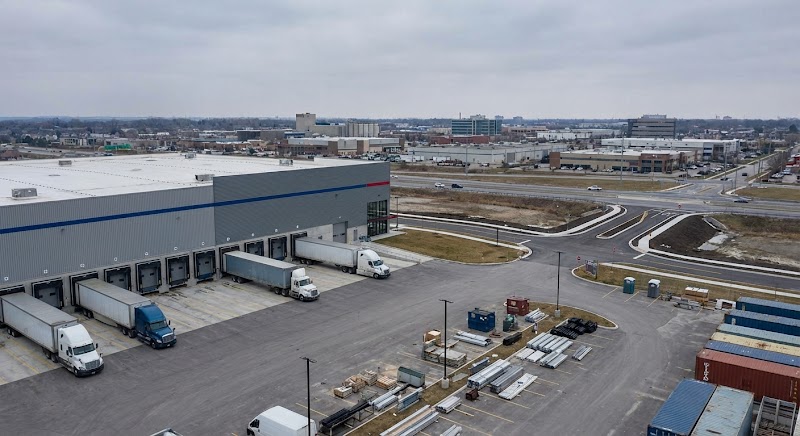
The green light for the sixth Costco store in the St. Louis metropolitan area is much more than a simple zoning approval. It's a calculated move that signals the retail giant's bet on densifying mature markets, a tactic that challenges the prevailing narrative of physical retail decline. The decision, confirmed just two days ago, forces a re-evaluation of local competitive dynamics and the company's own logistics infrastructure in the region.
For Costco, expanding in already-served territories isn't redundancy; it's strategy. The company's business model, anchored in its members' annual fees, thrives on convenience and reach. A new unit reduces travel time for a portion of the existing customer base, increasing visit frequency and average spending. Simultaneously, it serves as a powerful tool for acquiring new members in adjacent suburban areas who previously considered the distance a deterrent.
This is not a zero-sum game. The company's internal analysis certainly projected a degree of sales cannibalization from neighboring stores, but the final calculation points to a significant net gain. The bet is that the increase in total revenue, driven by new subscribers and greater loyalty from current ones, will far outweigh the marginal loss from established units. It's the logic of Costco's business in its purest form: the real value isn't in a product's margin, but in the LTV (Lifetime Value) of a satisfied member.
The Anatomy of Expansion and Its Trade-offs
The new unit follows the standard Costco playbook: a massive structure, typically over 150,000 square feet, accompanied by a high-volume gas station—one of the main traffic drivers and a tangible benefit of membership. The approval isn't just for a store, but for an ecosystem that acts as a gravitational anchor for other commercial developments.
The site selection process is obsessively data-driven, analyzing population density, per capita income, traffic patterns, and proximity to logistics corridors. The choice of St. Louis for a sixth unit indicates that the company's predictive models have identified a pocket of unmet or underserved demand, even with five other stores in operation. The decision implies a deep analysis of operational and market trade-offs.
| Axis of Analysis | Strategic Implication for Costco | Impact on Competitors (Sam's Club, Target) | Consequences for the Local Ecosystem |
|---|---|---|---|
| Market Share | Increased penetration and defense against rival advances. | Direct pressure on customer base and margins. | Market consolidation, potential hardship for smaller retailers. |
| Logistics | Greater last-mile efficiency, but potential stress on the regional distribution center. | Need to optimize their own supply chains to compete. | Increased heavy vehicle traffic; appreciation of industrial real estate. |
| Labor | Need to hire hundreds of employees, testing the strength of the employer brand. | Fierce competition for talent in the retail sector. | Creation of direct and indirect jobs, but potential pressure on the local labor pool. |
| Real Estate | Consolidation as an 'anchor tenant', increasing the value of the surrounding area and attracting other businesses. | Devaluation of competing shopping centers that lose foot traffic. | Increased tax revenue (property and sales); need for investment in road infrastructure. |
The Ripple Effect on Regional Competition
The arrival of a new Costco is a seismic event for local retail. The most directly affected competitor is Walmart's Sam's Club. The two operate remarkably similar warehouse club models, and the battle for members is fierce. The new store forces Sam's Club into a defensive posture, whether through aggressive promotions, reinforcing exclusive categories, or investing in the customer experience at its own locations to prevent churn.
Traditional retailers like Target, Walmart Supercenters, and supermarket chains will also feel the impact. Although they are not direct competitors in the club model, Costco competes aggressively in categories such as electronics, housewares, and, increasingly, fresh and organic foods. Costco's ability to offer low prices on high-volume products can erode the revenue of these players, forcing them to focus on convenience, specialization, or shopping experience to differentiate themselves.
Risks and Unanswered Questions
The official narrative celebrates job creation and investment. However, a critical analysis reveals underlying risks. The main question is that of saturation. Is there a point where a new store stops adding net value and simply redistributes existing revenue, increasing fixed operational costs without a proportional growth in the region's total revenue? Costco's leadership is betting that St. Louis has not yet reached this ceiling, but it is a high-capital wager.
Another point of concern is infrastructure. An operation of Costco's scale generates intense traffic flow, from both consumers and supply trucks. The plan's approval presumes that traffic impact studies were satisfactory, but the operational reality could overwhelm local roads not designed for such volume, requiring future public investments that are not on the company's tab.
The supply chain issue is also critical. A new store requires the regional distribution center to operate with higher throughput. This may require investments in automation, expansion, or simply push the current infrastructure to its efficiency limit, introducing operational fragilities that did not previously exist.
This move in St. Louis serves as a microcosm of Costco's broader strategy. The company is using its financial strength and the loyalty of its subscriber base to double down on physical retail, optimizing its logistical footprint and exerting maximum pressure on competitors. Execution will be the determining factor in validating whether this bet on densification is strategic genius or a step towards self-saturation.