Epigenetic Technology: A Critical Analysis of the Future of Medicine
An in-depth analysis of epigenetic technology. We unravel the challenges of DNA methylation, biological clocks, and the gap between promise and reality.
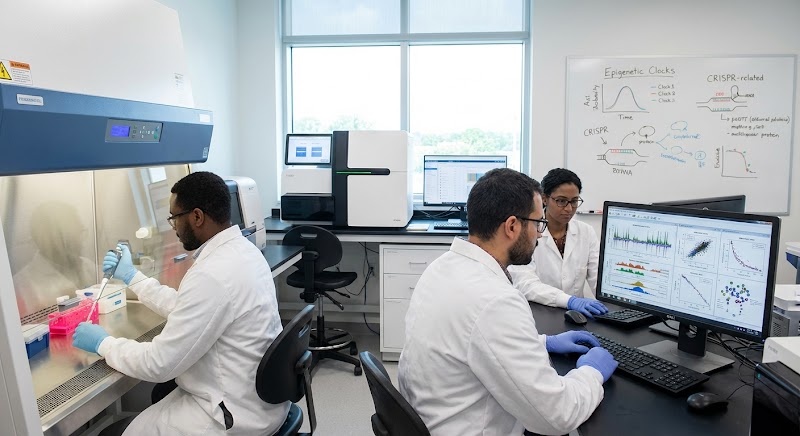
The narrative is seductive. Venture capital, hungry for the next defensible tech platform, saw in epigenetics the 'software' that runs on the 'hardware' of DNA. The promise is granular control over gene expression without altering the fundamental genetic sequence, opening doors to reversing aging, curing cancer, and customizing health on an unprecedented level. Venture capital funds have injected billions into startups like Altos Labs and NewLimit, turning molecular biologists into Silicon Valley celebrities.
However, this narrative obscures a complex operational reality and a monumental technical debt. The epigenome is not a clean, well-documented operating system; it's a tangle of legacy, stochastic, and noisy systems. DNA methylation and histone modifications, the main epigenetic mechanisms, are influenced by a dizzying number of environmental and metabolic variables. Isolating a causal signal from correlational noise is one of the biggest challenges in contemporary computational biology. The promise of 'reprogramming' cells with the precision of a software developer clashes head-on with the chaotic and redundant nature of biological systems.
While marketing talks about 'hacking' aging, laboratories struggle with the reproducibility of so-called 'epigenetic clocks.' The calibration of these biomarkers is notoriously unstable across different populations and tissues, making their clinical use for individual diagnosis still a high-risk bet. The investor's 'search intent' seeks a clear ROI; scientific reality offers a swamp of probabilities.
The Strategic Dilemma: To Diagnose or to Modify?
The race for epigenetic supremacy bifurcates into two main avenues: the use of markers for diagnosis and prognosis, and direct intervention to modify the epigenetic state. Both fronts have radically different potentials and dangers, and the maturity of each defines the competitive landscape. Diagnostics, while less revolutionary, is technically more feasible in the short term and represents the safest path to monetization and regulatory validation. Therapeutics, on the other hand, is the grand prize, but it carries technical and ethical risks of a higher order.
While companies like GRAIL (acquired by Illumina) focus on detecting methylation patterns in circulating free DNA for early cancer diagnosis, others, in the wake of CRISPR, seek to develop 'epigenetic editors.' The distinction is crucial and dictates the allocation of capital and the risk profile of the entire sector.
| Characteristic | Epigenetic Diagnostics (Reading) | Epigenetic Therapeutics (Writing) |
|---|---|---|
| Main Objective | Identify biomarkers for early detection, prognosis, and disease monitoring. | Actively modify gene expression to treat diseases, reverse cellular damage, or aging. |
| Technological Maturity | Moderate to High. Based on already established sequencing technologies (NGS). | Low to Experimental. Depends on precision editing tools (dCas9, ZFNs) still in development. |
| Key Challenge | Signal-to-noise ratio. Clinically validating that the detected patterns are causal and not mere spurious correlations. | 'Off-target' effects. Ensuring that the modification occurs only at the desired location, without unforeseen consequences in other parts of the genome. |
| Market Example | Liquid biopsy tests for cancer (e.g., Galleri test). Biological aging clocks. | Experimental therapies for rare genetic syndromes (e.g., Rett Syndrome). Research in cellular rejuvenation. |
The Ghost Infrastructure: Where Biology Collides with Silicon
The advancement of epigenetics is not just a biological challenge; it is, fundamentally, a data infrastructure problem. Each whole-genome methylome analysis generates terabytes of raw data. Transforming this data into actionable insights requires robust bioinformatics pipelines, massive computational power (typically GPU clusters), and, crucially, machine learning algorithms capable of discerning patterns amidst deafening noise. The 'latency' between sample collection and validated clinical interpretation is still a significant bottleneck for scalability.
The lack of standardization in data collection, processing, and analysis protocols makes it difficult to compare studies and build universal predictive models. We are in a phase analogous to the early days of the internet, with 'intranets' of genomic data that do not communicate, undermining the ability to build the scientific 'authority' needed to convince regulators and the healthcare system. The real competitive moat will not be in the proprietary reagent, but in who builds the most powerful data and AI platform to interpret the epigenome at scale.
The Cost of Rewriting: Technical Risks and the Plasticity Paradox
The idea of 'editing' the epigenome is where technological optimism reaches its peak and also its greatest vulnerability. CRISPR-based tools, like dCas9 fused to histone-modifying enzymes, promise surgical precision. The reality, however, is the persistence of 'off-target' effects – unintentional modifications in the wrong places of the genome, with unpredictable and potentially catastrophic consequences.
More subtle is the plasticity paradox. The epigenome is, by nature, dynamic and responsive to the environment. A therapeutic intervention that 'resets' an epigenetic pattern may only be temporary, reversed by subsequent cellular or environmental signals. Ensuring the stability and durability of an epigenetic 'edit' is an unsolved problem. Worse: an unwanted and stable modification could create a permanent iatrogenic pathology. And, unlike genetic editing, epigenetic modifications can, in some cases, be inherited for a few generations, opening an ethical minefield of transgenerational consequences.
The quest for authority in scientific and regulatory SERPs will require radical transparency about the limitations and risks, something that Silicon Valley's 'blitzscaling' culture often ignores in its pursuit of exponential growth narratives.