Epigenetic Technology: Scientific Reality vs. VC Hype
A skeptical analysis of the potential of epigenetics. Technical challenges, investment risks, and the abyss between the promise of longevity and biological reality.
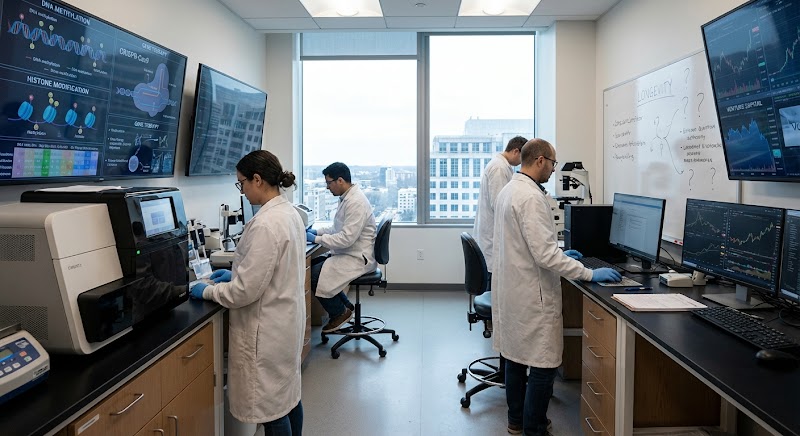
The silence of the genome has been broken. For decades, the dominant narrative focused on the DNA sequence as the sacred and immutable text of life. Now, the focus of venture capital and the tech media has shifted to the control layer that hovers over it: the epigenome. The promise is seductive: to rewrite not the genetic hardware, but the software that runs it, reversing diseases, slowing aging, and unlocking a new paradigm of personalized medicine. It's a story that sells well in pitch decks to Silicon Valley investors.
However, beneath the veneer of venture capital marketing, the biological reality is brutally more complex. Epigenetics is not a set of binary switches (on/off), but an analog, dynamic, and multifactorial system of rheostats that modulate gene expression in response to a continuous flow of environmental and metabolic signals. To believe that we can simply 'edit' these patterns with the precision of a software update is to ignore the intricate feedback network that governs cellular biology. The risk is not just therapeutic failure, but the creation of systemic instability with unpredictable consequences.
The Architecture of Genomic Influence
Epigenetic technology operates on concrete molecular mechanisms, primarily DNA methylation, histone modification, and the action of non-coding RNAs. Each represents an intervention vector with different degrees of maturity and difficulty. Methylation, the addition of a methyl group to a cytosine base, is perhaps the most studied marker, often associated with gene silencing. Histone modifications—the proteins that 'package' DNA—function as a complex code that dictates which regions of the genome are 'open' or 'closed' for transcription.
The challenge is not in detecting these markers—bisulfite sequencing and ChIP-Seq technology already produce terabytes of data. The real bottleneck is interpretation. Is a specific methylation pattern the cause of a pathology or a consequence of it? Answering this question is the frontier between creating a useful diagnostic biomarker and developing an effective therapy. Many biotech startups are betting billions on the latter, based on evidence that, in many cases, is still merely correlational. It is a high-risk bet, where biological complexity can easily nullify the elegance of an investment hypothesis.
| Epigenetic Mechanism | Primary Biological Function | Commercial Maturity (Scale 1-5) | Main Technical Challenge |
|---|---|---|---|
| DNA Methylation | Long-term gene silencing; genomic stability. | 4 (Diagnostics), 2 (Therapeutics) | Distinguishing causal from adaptive methylation; precise delivery of demethylating agents. |
| Histone Modification | Dynamic modulation of chromatin accessibility (activation/repression). | 2 (Diagnostics), 1 (Therapeutics) | Combinatorial complexity of the 'histone code'; very high risk of off-target effects. |
| Non-Coding RNAs | Fine and rapid regulation of post-transcriptional gene expression. | 3 (Diagnostics), 2 (Therapeutics) | Instability of the RNA molecule; challenges in systemic delivery and cellular specificity. |
The Data Ecosystem and the Bet on AI
The explosion of epigenomic data has created a parallel and, perhaps, more realistic market: that of bioinformatics and artificial intelligence. Each tissue sample analyzed generates a deluge of data that requires massive computational power and sophisticated algorithms to be deciphered. Cloud infrastructure companies like AWS and Google Cloud are direct beneficiaries, as are those that develop software platforms for analysis. The 'search intent' of researchers for significant patterns amidst this informational noise is what fuels the demand for machine learning models capable of identifying epigenetic signatures predictive of diseases or drug responses.
This is where the authority of the digital domain meets the complexity of the biological domain. An AI model can identify an epigenetic signature that predicts the development of pancreatic cancer with 95% accuracy. This is a monumental breakthrough for early diagnosis. However, this does not tell us how to safely reverse this signature. The ability to 'read' the epigenome is light-years ahead of our ability to 'write' it in a therapeutic and controlled manner. Confusing the two is the fundamental strategic error that could lead to the burning of hundreds of millions of investment dollars.
The Abyss Between Biomarker and Therapeutics
The path of least resistance and greatest likelihood of short- and medium-term commercial success for epigenetic technology lies in the field of biomarkers. Epigenetic 'clocks' that measure biological age, methylation panels for tumor detection in liquid biopsies, and markers that predict the response to immunotherapies are concrete and high-value applications. They inform clinical decisions but do not directly alter the patient's biology.
The transition to therapeutics is a quantum leap in complexity and risk. Tools like CRISPR-Cas9 are being adapted not to cut DNA, but to deposit or remove epigenetic marks at specific locations (epigenome editing). The technology is promising in laboratory models. However, in vivo delivery to the correct tissues, ensuring that only the desired target is modified, and the absence of long-term side effects (the dreaded 'off-target effects') are formidable barriers. Any unintentional epigenetic alteration could, ironically, induce the very pathologies it was intended to cure, such as cancer.
The narrative of 'cellular reprogramming' for longevity, popularized by startups with billion-dollar funding, is the most extreme manifestation of this hype. The idea of reverting an entire organism's epigenome to that of a younger state is, with current knowledge, more science fiction than a viable business plan. It ignores the critical function that epigenetic markings acquired throughout life have in suppressing tumors and maintaining cellular identity. An indiscriminate 'cleanup' could be catastrophic.
The future of epigenetic technology will not be a panacea, but a series of hard-won victories in well-defined niches. Progress will come from a deeper understanding of fundamental biology, not from technological platforms that treat the cell as a deterministic computational system. The question for investors, scientists, and the public is not if epigenetics will change medicine, but how, when, and at what cost. The road to establishing real clinical authority, far beyond optimizing SERPs with optimistic press releases, will be long and paved with healthy skepticism and rigorous scientific validation.