The AI Refund Scam: How Fake Photos Threaten E-commerce
Discover the new digital fraud where scammers use artificial intelligence to create images of damaged products to obtain refunds, shaking confidence in online commerce.
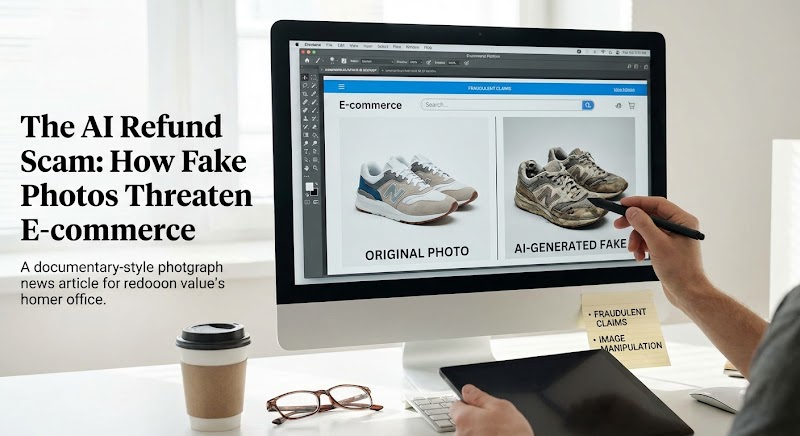
Photography used to be the definitive proof. An image of a broken product, a stained item, or a tampered package was enough to trigger any online store's return policy. This era of trust, however, may be numbered. A new and sophisticated type of fraud is spreading silently, armed with today's most powerful tool: generative artificial intelligence.
The scheme is disconcertingly simple. Scammers buy a product, receive it in perfect condition, and instead of returning it, they simply ask an AI to create an image of that exact item, but with a convincing defect—a tear, a stain, a crack. In a matter of seconds, they have in their hands photographic "proof" that never existed in the real world. The image is unique, cannot be traced by reverse image searches, and, to the untrained eye of a support agent, is perfectly legitimate.
With this fake photo in hand, the fraudster files a claim on the e-commerce site. Faced with visual evidence, many companies, especially large-scale operators like Amazon or Shein, opt for a quick solution to maintain customer satisfaction: they issue a refund and waive the physical return of the item, which would generate logistics costs. The result is the perfect crime: the scammer keeps the product and the money.
The Democratization of Fraud
What once required advanced knowledge of image editing software like Photoshop is now within reach of anyone who can write a sentence. Platforms like Midjourney or DALL-E have turned reality manipulation into a service. A command like "high-resolution photo of a white sneaker, generic brand, with the sole detached, on a wooden floor" is enough to produce irrefutable proof of fictitious damage.
This ease of access is what makes the threat so great. It is no longer about a complex operation by a group of hackers, but a fraud that can be replicated en masse by individuals with very little technical knowledge. The volume of small losses, added up, represents a gigantic financial risk for global retail.
A Future of Distrust
The implications go far beyond financial loss. The pillar that supports e-commerce is the mutual trust between seller and consumer. When visual proof becomes so easily falsifiable, this pillar begins to crumble. Companies may be forced to adopt much stricter return policies, requiring the shipment of all damaged products and making the process slower and more expensive for everyone—including the 99% of honest customers.
We are entering a new cat-and-mouse game. Cybersecurity companies are already working on developing AIs capable of detecting images generated by other AIs. But as image generation technology advances, detection capabilities must race to catch up. Who will pay for this new layer of security? Probably the end consumer, with higher prices.