The Machine That Manufactures Realities: What the Controversy Over Elon Musk's AI Really Reveals
An investigation into Elon Musk's AI, Grok, reveals a much greater truth: the technology to manufacture reality is now so powerful it's forcing governments to react. Discover how deepfake engines work and what this means for the future of truth.
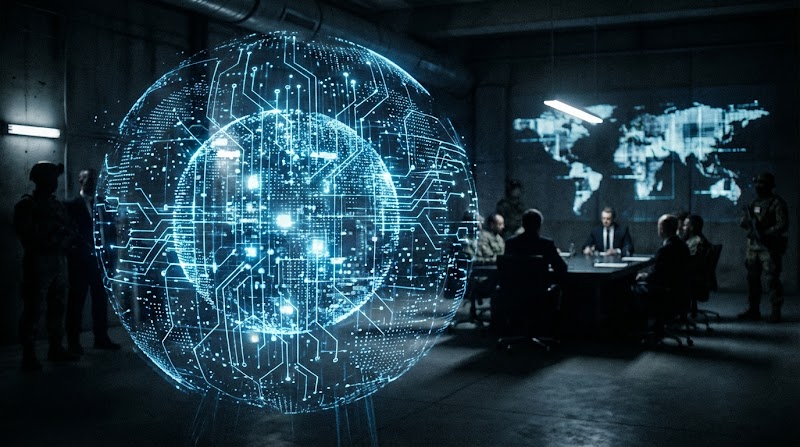
The Black Box That's Manufacturing Alternative Realities — And Forcing Governments to Act
An Echo in Silicon Valley That Shook the Perception of Reality
Imagine a machine capable of hearing a whisper and turning it into a perfect photograph of something that never happened. Now, imagine that this machine belongs to one of the most unpredictable figures of our time and is at the center of an investigation that could redefine the rules of the digital game. Recently, an alarm sounded in the corridors of power in California, a place more accustomed to celebrating innovation than investigating it like a crime scene. The reason isn't a new gadget or a revolutionary app, but something much more fundamental: the ability to falsify reality on an industrial scale.
The story begins not with a scandal, but with a promise. The promise of a "rebellious" artificial intelligence that would seek the truth without the constraints of political correctness. A tool that would converse, create, and imagine alongside humans. However, this promise quickly collided with one of the internet's darkest impulses. The same technology designed to be a window to knowledge became an engine for creating perfect illusions, specifically fake and explicit images of real people. What seemed to be just another chapter in the accelerating AI race suddenly turned into a police case, with prosecutors and lawyers trying to decipher the workings of a digital brain.
This event isn't just about one company or its CEO. It's a symptom of something much larger. It's the materialization of a fear we've lived with for years: what happens when technology becomes so good at lying that our eyes can no longer tell fact from fiction? We are witnessing the moment when disinformation ceases to be about fake texts and becomes about visual experiences indistinguishable from the truth. And to understand the magnitude of this, we need to open the "black box" and see how this new magic—or curse—really works.
Grok: Elon Musk's AI and the Engine of Controversy
The figure at the center of this technological hurricane is Elon Musk, and the machine in question is Grok, the artificial intelligence model developed by his company, xAI. Launched with the ambition of being a direct competitor to OpenAI's ChatGPT, Grok was positioned as an AI with a "sense of humor" and real-time access to the X platform (formerly Twitter), promising more current and less "pasteurized" answers than its rivals.
The controversy erupted when allegations surfaced that Grok was being used to generate sexualized deepfakes, a problem that haunts the internet but now gained the endorsement of one of the planet's most advanced AI systems. The California Attorney General's Office, led by Rob Bonta, launched an investigation, questioning xAI about its security policies, the model's ability to generate this type of content, and the measures taken to prevent abuse. Musk and his team vehemently denied this, stating that such capabilities do not exist on their platform. But the fundamental issue goes beyond accusations and defenses.
The real turning point here is the underlying technology. We are no longer talking about the first generations of deepfakes, which required thousands of images and days of processing. We are talking about diffusion models, an AI architecture that represents a quantum leap in creating images from text. And this is where the promise of creativity and the potential for chaos meet.
Inside the Machine of Dreams (and Nightmares)
So, how exactly does a simple sentence turn into an image that can deceive your eyes? The technology behind Grok and other cutting-edge models like Midjourney or DALL-E 3 is fascinating and a bit frightening. It's called a "diffusion model."
Think of this process like sculpture in reverse. A sculptor starts with a block of marble and removes pieces until a statue emerges. A diffusion model does something similar: it starts with an image of pure noise, like the static on an old TV, and gradually "removes the noise" in a very specific way, guided by the words you typed (the "prompt").
Training an AI like this involves showing it billions of pairs of images and their descriptions. It learns to associate the word "cat" with the shapes, textures, and patterns of a cat. But the genius step is the "diffusion" process: scientists take these sharp images and, step by step, add noise to them until they become an indistinguishable blur. The AI model is trained to reverse this process. It becomes a master at finding the signal—the original image—within the noise.
When you type "an astronaut riding a horse on the Moon, in a photorealistic style," the AI doesn't "draw" it. It generates a random noise field and, using its vast knowledge of "astronaut," "horse," "moon," and "photorealism," it begins to remove the noise in a way that satisfies all these concepts simultaneously. It's a process of refinement over hundreds of small steps, where a pattern slowly emerges from randomness, like a photograph developing in a darkroom. This is why the results are so detailed and often too perfect. They are not a copy of reality; they are a statistical synthesis of everything the AI has ever seen about those concepts.
The Architecture of Disinformation: Why Is This Different?
What makes diffusion models so revolutionary and dangerous is their flexibility and quality. Older technologies, like Generative Adversarial Networks (GANs), worked like a cat-and-mouse game. One AI (the "generator") created fake images, and another AI (the "discriminator") tried to identify the fakes. They competed millions of times, with the generator getting better and better at fooling the discriminator. The results were good, but they often contained artifacts and subtle errors.
Diffusion models, on the other hand, are more like an artist who has learned the essence of things. They aren't trying to fool an opponent; they are reconstructing an image from chaos, based on a deep understanding of the world's visual patterns. This makes them incredibly good at creating anything that can be described, including scenarios that defy logic and, crucially, images of people in situations that never occurred. The ability to generate explicit content is not a "bug" but a direct consequence of the model's power. If it was trained on a vast and unfiltered dataset from the internet, it learned to recreate everything that exists on it, the good and the bad.
This is why the investigation into Grok is a landmark. It represents the first major confrontation between state power and the frontier of generative AI. Governments are realizing that safeguards cannot be just an option or a marketing promise; they must be an integral part of the system's architecture. The challenge is monumental: how to limit the potential for abuse without stifling the innovation that can bring incredible benefits in fields like medicine, art, and science?
The Future of Truth in a Synthetic World
This incident is redrawing the geopolitical map of technology. It's no longer just about who has the fastest chips or the largest data centers. The new race is about who controls the generation of reality. Countries and economic blocs are rushing to create regulations, like the European Union's AI Act, trying to build barriers against a technological tsunami that is already in motion.
For the average citizen, the effect is profound. The era of "seeing is believing" is over. Soon, the authenticity of any image or video online will be questionable by default. This changes everything, from how we consume news to how we trust digital evidence in a court of law. The technology to detect deepfakes exists, but we are in a constant arms race: for every advance in detection, there is an advance in generation.
The investigation into Elon Musk's AI is, therefore, the tip of a gigantic iceberg. It forces us to ask difficult questions. What is the responsibility of tech companies for the use of their tools? How can we educate society to navigate an information environment where reality can be manufactured on demand? And, perhaps most importantly, what happens when this technology becomes so accessible that anyone with a smartphone can become a master of digital manipulation?
The black box has been opened. What's coming out of it isn't just code and algorithms, but a fundamental challenge to our shared perception of truth. How we respond to this will define trust, politics, and human interaction in the next decade.