SEOG Grant: A Strategic Analysis of the Federal Aid System
An in-depth analysis of the SEOG Grant as a capital allocation system. We explore its infrastructure, the risks of algorithmic bias, and the future of EdTech.
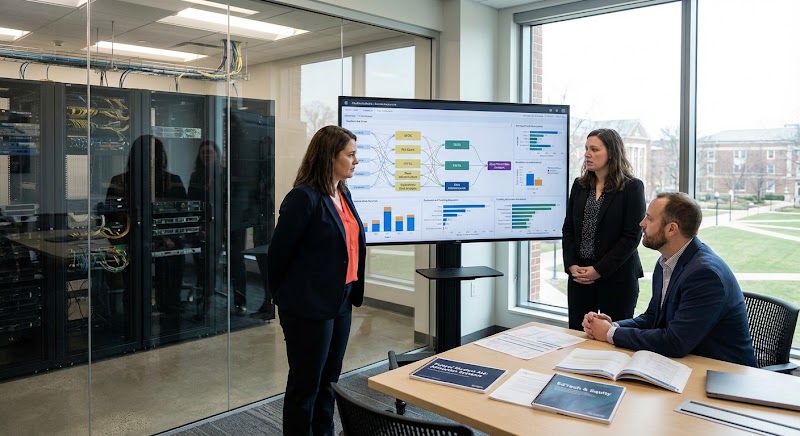
The debate over access to higher education often revolves around figures. Billions of dollars, budget increases, debt ceilings. However, this purely financial discussion obscures a fundamental reality: programs like the Supplemental Educational Opportunity Grant (SEOG) in the U.S. are, in essence, infrastructure systems. They are the digital, often analog, 'plumbing' that directs capital to where the greatest need and potential are presumed to exist. And like any legacy infrastructure, it is inefficient, opaque, and ripe for disruption.
The logic behind the SEOG is simple: allocate federal funds to educational institutions, which in turn distribute them to students with exceptional financial need. But the simplicity of the premise hides a complex chain of dependencies, from filling out the FAFSA (Free Application for Federal Student Aid) to each university's allocation algorithms. This is not a system designed for the era of real-time data analysis. It is an artifact of the batch processing era, where feedback on the effectiveness of each dollar invested is slow, fragmented, and, most of the time, nonexistent.
Analyzing the SEOG from a technology product perspective reveals its critical flaws. The user experience (the student) is bureaucratic. The success metrics (the performance of the allocated capital) are difficult to track. The system does not optimize for outcomes like course completion or reducing student 'churn rate,' but rather for compliance with the distribution process. The strategic question is not just whether the program should receive more funds, but whether its fundamental operational architecture is still defensible.
The Analog Architecture Behind Human Capital
To understand the gap between the current model and an optimized system, one must map the information and decision flows. The SEOG operates on a 'push' paradigm, distributing resources based on historical data and predefined formulas. A modern approach, influenced by venture capital and software engineering principles, would operate on a 'pull' model, where resource allocation is dynamic and adjusted by continuous feedback loops. The direct comparison between the two models exposes the technological and strategic abyss.
| Characteristic | Traditional Model (SEOG) | Data-Driven Model (Hypothetical) |
|---|---|---|
| Allocation Mechanism | Formulas based on the institution's historical data. | Real-time predictive algorithms based on student profile and risk. |
| Success Metrics | Total distribution of funds; regulatory compliance. | Graduation rate, time to degree, debt reduction, employability. |
| Feedback Loop | Annual, based on compliance reports. | Continuous, with allocation adjustments based on academic performance and engagement. |
| Student Experience | Passive and bureaucratic; form filling. | Proactive and personalized; data-driven aid recommendations. |
| Transparency | Low. Allocation criteria are an institutional 'black box'. | High. Dashboards for administrators and students. |
| Risk of Inefficiency | High. Capital can be allocated to students with a high risk of dropping out. | Mitigated. The system prioritizes interventions to maximize educational 'ROI'. |
This table is not an academic exercise. It represents the investment thesis of dozens of EdTechs trying to build solutions around the inefficiencies of systems like the SEOG. They are attacking the problem not through political means, but through technology.
EdTechs and the Unbundling of the 'Financial Aid Stack'
A university's financial aid ecosystem is a complex 'stack,' composed of institutional scholarships, federal aid like Pell and SEOG, and private loans. EdTechs are not trying to replace the SEOG, but rather to build a layer of intelligence on top of it. Platforms like ScholarshipOwl or Going Merry automate the search for aid, acting as an aggregator that optimizes the student's chances. Others, like Edmit, provide ROI analysis for different courses and universities, allowing for an informed decision even before applying for FAFSA.
The market opportunity is clear: use data to bring transparency and efficiency to a system that moves hundreds of billions of dollars annually. The promise is to transform financial aid from a reactive and bureaucratic process into a strategic talent management tool. If a university can use its pool of resources (including SEOG) to reduce dropout rates by 5%, the financial and reputational impact is immense. This changes the conversation from 'cost of education' to 'investment in human capital'.
The Optimization Dilemma: Algorithmic Bias in Access to Education
However, the transition to a data-driven model is not without profound dangers. The introduction of machine learning algorithms to 'optimize' SEOG distribution opens a Pandora's box of ethical and operational risks. The biggest of these is algorithmic bias. If a predictive model is trained on historical data, it can learn to replicate and amplify existing inequalities.
For example, an algorithm might identify that students from a certain zip code or socioeconomic profile historically have a higher dropout rate. The algorithm's logical 'solution' would be to reduce resource allocation to this group, considering it a 'high-risk investment.' This would create a devastating vicious cycle, where the students who need the most support are precisely those the automated system would cease to support. The quest for maximum efficiency could result in the systemic denial of opportunities.
The implementation of such systems would require extremely robust data governance and constant audits to ensure fairness. The question is not just whether the algorithm is accurate in its predictions, but what the social consequences of its decisions are. Capital optimization cannot come at the expense of education's fundamental mission: social mobility. An institution's authority in the 'best universities' SERP cannot be built on a foundation of algorithmic exclusion.
The discussion about the future of programs like the SEOG needs to mature. It must move from the purely budgetary field to the arena of systems architecture. The relevant question for the next decade is not how much money to allocate, but how to build a distribution infrastructure that is simultaneously more efficient, transparent, and fundamentally fair. The challenge is one of engineering as much as public policy, and the solution will define the foundations of access to knowledge for the next generation.