Analysis: End of SEOG Grant in Trump's Budget Threatens Thousands of Students
Analysis: End of SEOG Grant in Trump's Budget Threatens Thousands of Students
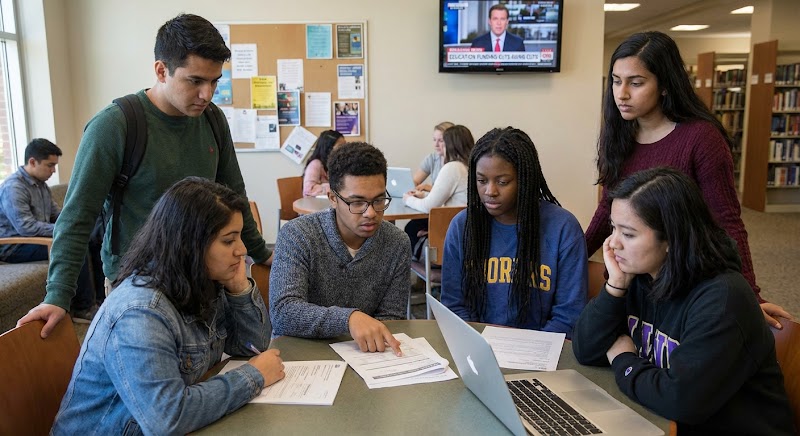
The Trump administration's budget proposal for the next fiscal year has hit the higher education sector like an earthquake. This is not a marginal adjustment or a realignment of priorities; it is a calculated demolition of long-standing programs that form the backbone of federal financial aid. The document, a 'skinny budget' due to its preliminary nature but no less indicative of intent, proposes a radical re-engineering of the government's role in financing higher education.
At the epicenter of this shockwave is the proposal for the total elimination of the Supplemental Educational Opportunity Grant (SEOG). For those not initiated in the minutiae of student aid policy, SEOG might seem like just another acronym in the complex federal system. However, its extinction represents a direct and disproportionate blow to the lowest-income students—those with 'exceptional financial need,' the very population the program was designed to serve.
This move is not an isolated event. It fits into a broader fiscal strategy that questions the very premise of education as a public good subsidized by the state. The implicit message is clear: the financial risk of higher education should be increasingly transferred from the taxpayer to the individual.
Dismantling the Framework of Federal Aid
The proposal is not limited to a single program. It attacks multiple pillars of the aid system. The Federal Work-Study program, which subsidizes part-time jobs for students, faces a significant cut, described as a reduction of 'at least 50%.' Interest subsidy programs for student loans are also in the crosshairs. While the Pell Grant, the largest federal grant program, would be preserved at its maximum value, the proposal aims to redirect its reserve funds, a maneuver that limits its future expansion capacity.
This multifaceted approach creates a ripple effect. The elimination of the SEOG Grant removes a crucial layer of support that complements the Pell Grant. Without it, the value of the Pell Grant, which already covers an ever-smaller fraction of the total cost of tuition and expenses, becomes even less sufficient for the students who need it most.
| Aid Program | Status in the Budget Proposal | Strategic Implication for the Student |
|---|---|---|
| SEOG Grant | Total elimination | Loss of supplemental aid for very low-income students. Increased need for loans. |
| Federal Work-Study | Cut of 'at least 50%' | Drastic reduction in on-campus work opportunities. Loss of income and professional experience. |
| Pell Grant | Funding level maintained, but with use of reserves | Stagnation of the grant's purchasing power. Less ability to respond to tuition increases. |
| Interest Subsidies | Reduction/Elimination | Increased total cost of student loans over time. Greater post-graduation debt. |
The Systemic Impact: More Than Just a Budget Cut
The end of the SEOG Grant is not just a matter of erasing a line in the Department of Education's budget. It is a change that reverberates throughout the entire higher education ecosystem. Educational institutions, particularly community colleges and public universities that serve a large population of low-income students, will be the hardest hit.
These institutions rely on a portfolio of federal aid to assemble viable financial aid packages. With the removal of SEOG, they face a dilemma: absorb the cost and divert funds from other operational areas, increase tuition—making access even more difficult—or simply watch enrollment of minority and low-income students decline. Socioeconomic diversity on campus, a goal pursued for decades, is directly threatened.
The logic behind the cuts, according to the administration, is the need for fiscal discipline and to focus resources on the 'most effective' programs. However, the metric of 'effectiveness' seems to be narrowly defined, ignoring the long-term social and economic returns of a more educated population. Reducing the public debt is the stated goal, but the cost may be a reduction in social mobility and workforce competitiveness.
The Unstated Risks of the New Fiscal Policy
The budget proposal is, for now, just that: a proposal. The final power over appropriations lies with Congress, where the political battle will be fought. However, the document serves as a declaration of intent and sets the terms of the debate. Skepticism about the intrinsic value of higher education has become a mainstream political position.
The operational risk for universities is immense. They now need to plan their next admission cycles and budgets under a cloud of uncertainty. How can they advise prospective students and their families about the availability of financial aid when fundamental programs like the SEOG Grant might simply cease to exist? This instability, in itself, is a deterrent for students who are hesitant to take on substantial debt.
Furthermore, there is a broader economic risk. By making access to education more difficult for the poorest segments of the population, the policy could inadvertently stifle talent and innovation. The next disruptive engineer or the scientist who develops a new technology could be the very student who depended on a combination of a Pell Grant and an SEOG Grant to attend university.
The debate surrounding this budget forces a critical reflection on what the United States, as a nation, expects from its higher education system. The proposed elimination of the SEOG Grant is not an isolated austerity measure; it is the opening move in a strategic game that could redefine access to educational opportunity for an entire generation.