Costco Business Analysis: Supply Chain Risks and the B2B Model
A $400k lobster heist exposes the vulnerabilities of the Costco Business model. An analysis of logistics, security, and the future of B2B wholesale.
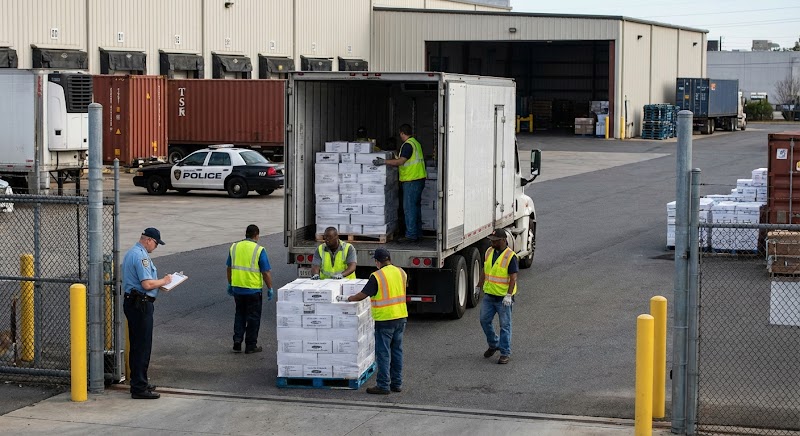
A $400,000 shipment of live lobsters doesn't just disappear by chance. It vanishes in a blind spot of the logistics network that connects suppliers to one of the world's largest retail players. The incident, which occurred on a route to Costco distribution centers in the American Midwest, transcends a simple police report. It acts as an unscheduled stress test on the operational architecture of the company's least visible and perhaps most strategic division: the Costco Business Center.
While the average consumer associates Costco with wide aisles and bulk purchases for the home, the company's B2B engine operates with a distinct logic, focused on small and medium-sized businesses—from restaurants to offices. This arm of the operation is an efficiency machine, optimized to reduce the number of SKUs, maximize inventory turnover, and deliver minimal margins on colossal volumes. The premise is the same as in retail, but the execution and implications are fundamentally different. The theft of the lobster shipment, a high-value and extremely perishable item, precisely illuminates the criticality and vulnerability of this operation.
Costco's Double Game: Retail vs. Wholesale
Understanding the fracture exposed by this incident requires differentiating between Costco's two ecosystems. The traditional retail (Warehouse) and the Business Center cater to different 'Search Intent' profiles, both in the physical and digital worlds. One seeks home optimization; the other, the viability of a commercial operation. The cost structure, product mix, and supply chain are calibrated for each of these audiences, creating two giants that share the same efficiency DNA.
| Characteristic | Costco Warehouse (Retail) | Costco Business Center (B2B Wholesale) |
|---|---|---|
| Target Audience | Families and end consumers. | Restaurants, offices, small businesses. |
| Product Mix | Broad and rotating (electronics, apparel, food). | Focused on business operations (packaging, cleaning supplies, large-volume ingredients). |
| Hours | Standard retail hours, including weekends. | Focused on business hours, often closing early and on Sundays. |
| Sales Volume | Pallets and 'club-size' packages. | Master cartons, industrial volumes, formats not available in retail. |
| Services | Optical, pharmacy, food court. | Last-mile delivery for businesses, no end-consumer services. |
This specialization allows the Costco Business Center to achieve a level of optimization that would be impossible in traditional retail. However, this same efficiency creates risk vectors. A just-in-time chain for fresh, high-value products like lobsters depends on flawless logistical execution. Any disruption—be it an orchestrated theft or a simple mechanical failure—reverberates with a disproportionate financial impact.
The Anatomy of a Logistical Vulnerability
The theft was not an act of opportunism; it was an operation that exploited the weakest point in the chain: ground transportation. High-value shipments are primary targets for organized crime, which has the intelligence to identify routes, schedules, and types of goods. The industry term 'shrinkage' usually refers to small thefts or damages, but incidents like this elevate the concept to a strategic dimension.
The question Costco's board must be analyzing is not just 'how do we recover the loss?' but 'is our low-cost logistics model exposing us to systemic risks?'. The obsession with keeping costs down can lead to an under-allocation of resources in advanced security, such as escorts for specific shipments, real-time GPS tracking with multiple sensors, or remote container locking technologies.
When Efficiency Becomes a Calculated Risk
Costco's efficiency is legendary. But it operates on the premise of a controlled risk environment. What happens when risk vectors become more sophisticated? Organized crime today uses technology to plan its attacks, turning logistics into an asymmetric battlefield. Defense can no longer be merely reactive.
The incident forces a reassessment of the trade-off between the cost of prevention and the cost of loss. Investing in a more robust security infrastructure for the supply chain could erode the tight margins that define Costco's business model. Not investing, on the other hand, could compromise the trust of B2B customers, who depend on the predictability of supply to keep their own operations running. A restaurant that bases its menu on Costco lobsters cannot simply absorb a delivery failure.
The Future of the Supply Chain: Artificial Intelligence and Resilience
This episode is a microcosm of the challenges that logistics will face in the next decade. The solution is not in more locks or guards, but in predictive intelligence. AI platforms are already capable of analyzing trillions of data points to optimize routes not only for speed and cost but also for security. They can predict risk zones based on historical patterns, weather conditions, and even social media activity, suggesting proactive detours.
The 'Supply Chain Tech' ecosystem is buzzing with solutions that promise total visibility, from the point of origin to the store shelf. IoT sensors in containers can monitor temperature, humidity, and tampering attempts, transmitting real-time alerts. Blockchain integration can create an immutable record of each step of the product's journey, increasing transparency and making it difficult to 'launder' stolen goods.
The question for Costco, and for all industry giants, is the speed of adoption of these technologies. The race for authority on the B2B market's SERP will not be won on price alone, but with the guarantee of a future-proof supply chain.
The lobster heist, in the end, is less about crustaceans and more about the architecture of trust in modern commerce. The lost cargo is a one-time financial loss. The real long-term loss could be the perception that a system, once seen as infallible in its efficiency, has points of failure that can be exploited with surgical precision. The next competitive frontier is not in the warehouse aisles, but in the algorithms that protect the digital and physical arteries that supply them.