Starlink Satellite Disintegrates in Orbit: A Mystery in the Sky
An investigation into the mysterious disintegration of a SpaceX Starlink satellite. Learn about the causes, the danger of space debris, and the implications for the future of mega-constellations.
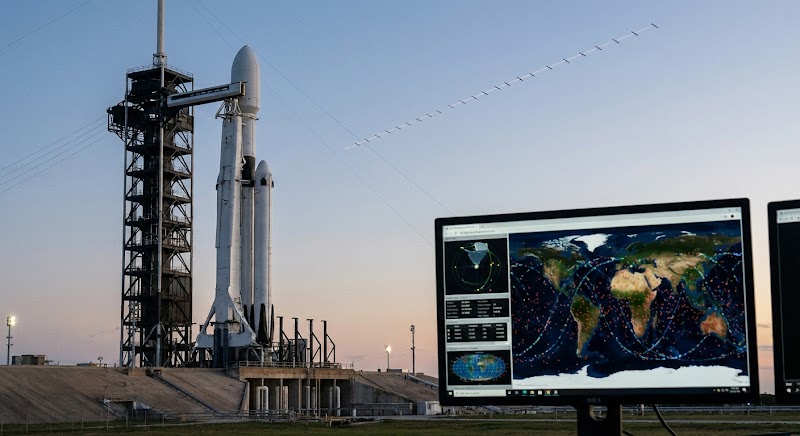
Space Alert: Starlink Satellite Disintegrates and Leaves a Trail of Debris
A silent drama is unfolding hundreds of kilometers above our heads. A satellite from Starlink, part of Elon Musk's ambitious SpaceX constellation to provide global internet, has disappeared from the radar. In its place, a cloud of debris now orbits the Earth, a metallic ghost of what was once a piece of cutting-edge technology.
The event, officially classified as an "anomaly," raises urgent questions about the safety and sustainability of satellite mega-constellations. What really happened in the darkness of space? Was it an explosion? And most importantly: do these fragments pose a danger to us here on Earth?
What do we know so far?
The incident involved a first-generation Starlink satellite. Space tracking experts, including the U.S. Space Force, observed a sudden and dramatic change. The satellite, which was following its predictable trajectory, simply ceased to exist as a single object.
The evidence points to a fragmentation event, which can be described as a disintegration. Instead of a single point of light, tracking systems now detect dozens of smaller pieces.
Here is a summary of the confirmed facts:
- The Event: A single Starlink satellite disintegrated in low Earth orbit (LEO).
- The Cause: It was not a collision with another object. Analyses indicate that the event was caused by an internal failure of the satellite itself.
- The Debris: A cloud of debris was created and is being actively monitored.
- The Timing: The failure occurred unexpectedly, without prior warning.
This is not the first Starlink satellite to fail, but it is one of the most notable disintegration events of the constellation to date, putting a spotlight on the operational challenges of managing thousands of satellites simultaneously.
Was it an explosion? What does SpaceX say?
While the word "explosion" captures the public's imagination, the technical reality may be more subtle. SpaceX, known for its controlled communication, refers to the incident as an "anomaly."
Industry experts suggest that the most likely cause was a problem in the propulsion system or the batteries. A prominent theory is that of an "uncontrolled energy release." This can mean several things:
- Propellant Tank Failure: A rupture or leak in the system that stores krypton gas (used for maneuvers) could cause a rapid depressurization, tearing the satellite apart.
- Battery Short-Circuit: A catastrophic failure in the lithium-ion batteries could lead to overheating and a chain reaction that would disintegrate the structure.
SpaceX designs its satellites with a passive "deorbiting" system, ensuring they safely leave orbit at the end of their service life. However, a sudden and violent failure like this prevents any controlled maneuver, instantly turning a valuable asset into a dangerous debris field.
Falling Debris: Is There a Danger to Us on Earth?
This is the question that most concerns the public. The short and reassuring answer is: the direct risk to people on the ground is extremely low.
The vast majority of fragments generated by an event like this are small. Upon re-entering the Earth's atmosphere at hypersonic speeds (thousands of kilometers per hour), friction with the air generates immense heat, causing most of this debris to vaporize completely, creating what we see as shooting stars.
The real danger is not on the ground, but up there. Each fragment created becomes a potential projectile, traveling at over 28,000 km/h. At that speed, even a coin-sized piece of metal can cause catastrophic damage to another satellite or, worse, to a manned spacecraft like the International Space Station (ISS).
This incident fuels fear of the so-called "Kessler Syndrome": a theoretical scenario in which the density of objects in orbit becomes so high that collisions begin to generate more and more debris, creating a chain reaction that could make low Earth orbit unusable for generations.
What does this mean for Starlink internet?
For users of Starlink's satellite internet, the direct impact is nil. The SpaceX constellation already has more than 6,000 satellites in orbit, with plans for tens of thousands. The loss of a single unit is statistically irrelevant for the coverage and quality of the service. The network is designed with redundancy to handle individual failures.
The problem is long-term. Every failure like this serves as a reminder of the inherent risks of operating the largest satellite constellation in history. SpaceX and other companies planning similar projects are under increasing scrutiny to ensure their designs are sustainable and do not irreparably pollute the orbital environment.